

Research Washington OH Guide
Welcome to our used car market research Washington OH resource. If you are comparing prices, weighing mileage and condition, or planning a smart purchase timeline, this page highlights what matters most for shoppers in Washington County and surrounding Ohio markets. We combine local pricing patterns, vehicle demand insights, and ownership cost factors so you can make a confident decision. Explore common price drivers like trim and options, maintenance history, and title status. Learn how seasonality and interest rates influence timing. You can also browse our current selection on used-inventory and review recently sold vehicles on sold-inventory to benchmark fair pricing. For deeper learning, our blog covers Ohio buyer tips and checklists. If you want to learn more about our team or store policies, visit about-us, visitor-agreement, and privacy-policy. When you are ready to discuss a vehicle or have questions, contact-us for fast help from a knowledgeable team that understands the Washington County market.
This guide explains how to read the Washington County used car market with clarity. You will see typical price bands by age and mileage, learn how to verify history reports and inspection records, and understand how financing terms influence total cost. Compare live listings on used-inventory and review local trends on our blog for the most current insights.
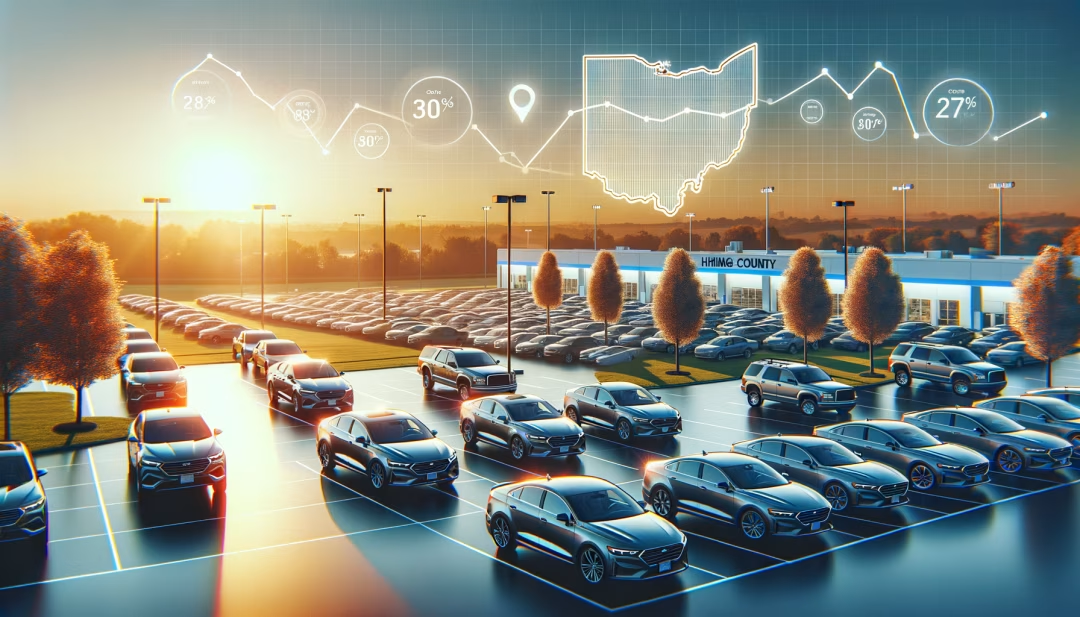
How to Analyze Used Car Prices in Washington County Ohio
Used car prices in Washington County reflect a blend of local demand, regional supply, and broader state trends. Buyers who learn the main pricing drivers can compare vehicles more effectively and avoid surprises. Focus on year, trim, mileage, condition, accident history, ownership history, service records, and options. These factors can move a price by hundreds or even thousands of dollars. You can browse used-inventory to see how these variables affect real vehicles in stock and check sold-inventory for examples of recent transactions that help establish fair market value.
Local demand patterns are important. Rural and suburban drivers often prioritize reliability, cargo flexibility, and all season capability. As a result, midsize crossovers, light duty trucks, and compact SUVs tend to hold value. Sedans with strong efficiency and low maintenance costs also see steady interest because they keep ownership costs under control. When you compare models, look at how often a vehicle sells in our area and how long similar listings remain on the market. Vehicles that sell quickly usually carry smaller discounts from market averages.
Key Price Drivers You Can Verify
A strong evaluation process uses documentation to confirm quality. Verify history with a reputable report, match the report to title status, and review inspection findings. Compare maintenance intervals against the manufacturer schedule. Look for evidence of timely oil services, brake work, tire replacements, and fluid changes. Ask for documentation of major items like timing components, transmission service, and cooling system repairs, especially on higher mileage vehicles.
- Mileage clusters: under 60k is premium, 60k to 100k is mid tier, 100k to 140k is value tier when serviced on time
- Title and history: clean titles and no structural damage support higher pricing and faster resale later
- Options and trim: safety tech, all wheel drive, tow packages, and advanced infotainment improve demand
- Ownership cost: tires, brakes, insurance class, and fuel economy affect long term value beyond the sticker price
Timing Your Purchase in Washington County
Seasonality has a real impact on selection and pricing. Trucks and SUVs often command stronger pricing before winter due to traction and cargo needs. Fuel efficient sedans can see increased interest during spring and summer driving. Month end and quarter end may bring additional pricing flexibility as dealers manage inventory turns. Watch interest rates and lender programs as well. Even small rate changes can shift the total cost of ownership over a multi year loan. Review current vehicles on used-inventory and follow insights on our blog for changes in selection or rates that align with your target budget.
Mileage Versus Condition
Mileage is a headline number, but condition often tells the better story. A vehicle with higher miles that shows consistent maintenance can provide dependable service at a fair price. Conversely, a low mileage vehicle with gaps in service records or accident damage may cost more in the long run. Evaluate the interior for wear that aligns with the odometer. Check the engine bay for leaks or aftermarket modifications that may affect reliability. Inspect tire age and matching brands. Review brake rotor condition and fluid clarity. These small details help confirm whether the asking price reflects actual quality.
Popular Body Styles and Typical Use Cases
Washington County drivers often balance commuter miles, weekend projects, and regional travel. Compact and midsize SUVs offer flexible cargo space and improved ride height for winter. Trucks remain popular for towing and home improvement needs. Compact sedans deliver low fuel and tire costs for budget focused drivers. When comparing body styles, weigh purchase price against fuel use, tire size costs, and potential insurance differences. Aim for a configuration that meets 90 percent of your real world needs rather than chasing a rare scenario. That balance keeps ownership cost in line with your goals.
How to Read Listings Effectively
A complete listing shares the year, trim, drivetrain, options, mileage, accident history, title status, and a documented inspection. Photos should include the tires, brakes, underbody angles, and interior touchpoints. Review the description for recent maintenance and any noted issues. Cross check the VIN with a history report to confirm consistent records. Contact the seller to request service invoices if they are not posted. Compare the listing against similar vehicles on sold-inventory to see where the price sits relative to recent examples.
Inspection and Test Drive Checklist
A structured in person review saves time and reduces risk. Walk around the vehicle when it is clean and parked on a level surface. Look for panel gaps, overspray, and paint texture differences that may indicate prior repairs. Check the tire date codes and tread depth. During a cold start, listen for ticking or misfires and watch for smoke. On the road, test acceleration, braking, alignment, transmission behavior, and climate control. Use a flat route and a mild grade. Verify backup camera, parking sensors, and safety systems. If possible, have a trusted technician review the vehicle before finalizing your decision.
- Confirm all keys and manuals are present
- Verify spare tire, jack, and inflator kits
- Test all windows, locks, and mirrors
- Pair a phone to validate Bluetooth and audio functions
Financing Fundamentals and Total Cost
Your payment is shaped by price, down payment, interest rate, taxes, and term length. A lower rate often saves more than a small price reduction when you finance for multiple years. Compare offers from credit unions and dealer network lenders. Understand any prepayment policy. Confirm whether the lender applies a simple interest model. Consider extended service plans on higher mileage vehicles if the price and coverage make sense for your use case. Review our blog for articles on budgeting and ownership planning across Ohio markets.
Resale and Ownership Planning
Resale value improves when you keep complete records and stay ahead of maintenance. Save digital and paper invoices, document tire rotations, and record battery or brake replacements. Keep the interior and exterior clean with periodic detailing to reduce wear. When you list the vehicle in the future, your documentation will support strong pricing and shorten time to sale.
Local and Nearby Market Comparisons
Washington County prices often align with neighboring Ohio counties. If you are comparing markets, review these regional research pages for broader context. Each page summarizes county level dynamics so you can judge whether to widen your search or stay local.
Helpful Resources
Explore these resources to extend your research and learn more about our store and policies.
- Inventory today: used-inventory
- Recently sold insights: sold-inventory
- Buyer education: blog
- Our team and story: about-us and bios
- Store policies: visitor-agreement and privacy-policy
- Get answers: contact-us
Sample Price Band Benchmarks
Exact prices vary with condition and options, but the following sample bands can help you frame expectations when viewing Washington County listings. Use these as conversation starters and always adjust for documented service, accident history, tire age, and seasonal demand swings.
- Compact sedan with 70k to 95k miles and clean history often lands in a budget friendly range while delivering solid fuel economy
- Midsize SUV with 80k to 120k miles and all wheel drive commands a mid tier price due to family utility and winter capability
- Half ton truck with tow package and service records may carry a premium based on towing demand and rural project use
How to Cross Shop Models
Cross shopping creates negotiating leverage and helps you locate the right fit. Identify two or three alternatives that solve the same daily needs. For example, if you want a compact SUV, compare options with similar cargo volumes, safety ratings, and powertrains. Review maintenance costs and common repair items using trusted owner forums and independent reliability studies. Then search our used-inventory for matches and save a shortlist. Track price changes for a week to see whether a vehicle moves or receives new photos or service updates. Pair this with insights from blog articles that cover model comparisons in Ohio.
Documentation That Safeguards Your Budget
Before you finalize your decision, gather a copy of the history report, the inspection checklist, and any reconditioning records. Confirm that the VIN matches all documents. Review any open recalls and schedule them with a franchised service center. If the vehicle includes a limited warranty or service plan, verify coverage terms, deductible, and claim process. Keep digital copies in cloud storage and note the date of purchase. This set of documents protects your purchase and supports future resale value.
Frequently Asked Questions
Selection often rises in late summer and early fall as trade ins increase, while trucks and SUVs can price stronger before winter. Monitor interest rates and watch used-inventory for price changes over a few weeks. End of month can offer flexibility as dealers balance inventory turns.
Mileage is a strong input, but maintenance history and condition can offset it. A well documented vehicle at 100k miles can be a better value than a 60k mile car with gaps in service or accident damage. Always review inspection records and match the VIN to the history report.
Ask for a history report, a multipoint inspection, reconditioning invoices, and any warranty or service plan terms. Confirm that the VIN on all documents matches the vehicle. Save copies for future resale and for planning maintenance intervals on your schedule.
A small rate change can add or subtract significant dollars over a multi year loan. Compare offers, consider a slightly larger down payment, and evaluate shorter terms if they fit your budget. Balance a fair vehicle price with the best rate you can secure to reduce total cost of ownership.
Yes. Washington County prices are competitive, but nearby counties may have different selections or trim mixes. Use pages like used-car-market-research-franklin-oh and used-car-market-research-cuyahoga-oh to compare trends. Always adjust for transport time and any title or tax differences.
Office Hours
Monday
Tuesday
Wednesday
Thursday
Friday
Saturday
9:00 am - 5:00 pm
9:00 am - 5:00 pm
9:00 am - 5:00 pm
9:00 am - 5:00 pm
9:00 am - 5:00 pm
Closed
